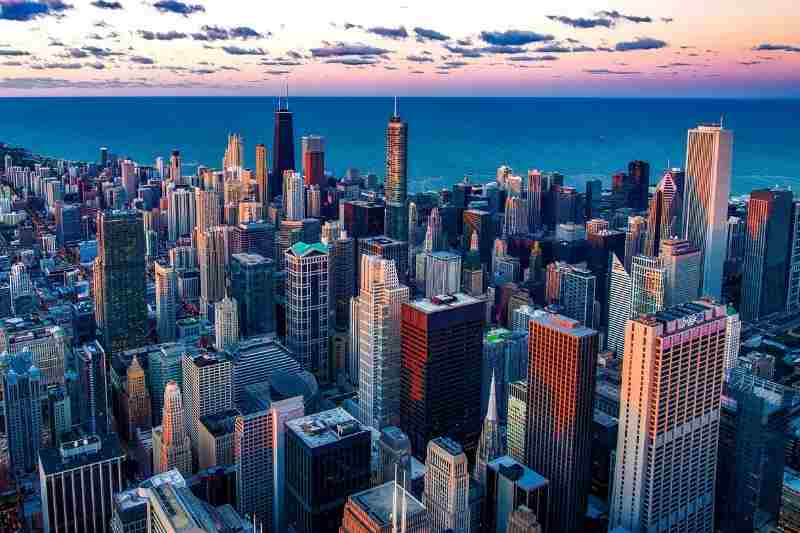
Stand in the center of almost any major global city and one feature becomes obvious very quickly.
People live close together.
Apartment towers rise dozens of floors into the sky. Residential buildings share walls, elevators, and hallways. Entire neighborhoods house tens of thousands of residents within a relatively small geographic area.
This pattern reflects one of the defining features of modern urban development.
Density.
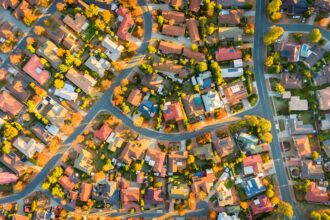
Housing density refers to the number of people or residential units located within a given area of land. As cities expand economically and attract more residents, housing density often increases.
Yet density is more than an architectural characteristic.
It shapes how people interact, how communities function, how infrastructure operates, and how cities evolve socially.
Understanding the social impact of housing density helps explain why modern cities look and behave the way they do.
Why Cities Become Dense
Cities do not become dense randomly.
Several powerful forces push urban areas toward higher population concentration.
Economic opportunity remains one of the strongest drivers.
Jobs, financial institutions, universities, hospitals, and cultural centers cluster in cities. These institutions attract workers from surrounding regions and sometimes from other countries.
As populations grow, housing demand rises.
Urban land is limited. When demand exceeds available space, buildings grow vertically rather than horizontally.
High-rise apartments and mixed-use developments allow cities to accommodate large populations within constrained geography.
Public transportation networks also support dense development by allowing residents to move efficiently without relying on long commuting distances.
Density and Urban Affordability
Housing density often appears in discussions about affordability.
When cities allow higher-density development, more housing units can be built within the same area of land.
In theory, increasing supply should help reduce housing shortages and moderate price increases.
Urban planners frequently advocate for density as a solution to housing affordability challenges.
However, the relationship between density and affordability is not always straightforward.
In some high-demand cities, dense housing developments may still command high prices because the location itself remains extremely desirable.
Luxury apartments in dense downtown districts can be just as expensive as low-density suburban homes.
Density therefore interacts with broader economic forces including income levels, land values, and investment trends.
Social Interaction in Dense Environments
One of the most interesting aspects of housing density involves how it influences social behavior.
In dense neighborhoods, people encounter each other frequently.
Residents share elevators, sidewalks, public transit systems, and neighborhood amenities. Cafés, grocery stores, and parks become shared spaces where daily interactions occur.
These encounters can strengthen social connectivity.
Urban sociologists often note that dense neighborhoods encourage informal social networks. Residents may develop familiarity with neighbors even without formal relationships.
At the same time, density can also create anonymity.
Large populations allow individuals to move through cities without necessarily forming deep connections with others.
Urban life often balances these two dynamics: proximity and independence.
Public Infrastructure and Density
Dense cities rely heavily on efficient infrastructure.
Transportation systems must move large numbers of people quickly. Subways, buses, and commuter rail networks play essential roles in supporting urban mobility.
Utilities such as water supply, waste management, and electricity distribution must also accommodate high population concentrations.
Well-designed infrastructure can make dense cities highly efficient.
Public transit reduces the need for private vehicles. Shared utilities distribute resources more effectively than scattered rural systems.
However, infrastructure challenges emerge when population growth exceeds system capacity.
Traffic congestion, overcrowded transit networks, and strained public services can become major issues in rapidly growing cities.
Urban planning therefore plays a critical role in balancing density with infrastructure investment.
Environmental Implications
Housing density also influences environmental sustainability.
Compact urban development often reduces transportation emissions because residents travel shorter distances between homes, workplaces, and services.
Dense cities support walking, cycling, and public transit use.
Energy efficiency can also improve in high-density housing.
Apartment buildings typically share walls, reducing heating and cooling requirements compared with detached houses.
However, dense urban environments must manage environmental challenges such as air pollution, noise levels, and limited green space.
Parks and urban trees become especially important in maintaining livable environments within densely populated areas.
Mental Health and Urban Living
The psychological effects of living in dense cities remain an important topic of research.
Urban environments offer cultural opportunities, professional networks, and social diversity.
At the same time, constant activity and crowded spaces can sometimes create stress.
Access to quiet spaces, parks, and community centers can improve quality of life for residents of dense neighborhoods.
Urban planners increasingly recognize the importance of designing cities that support both economic activity and human wellbeing.
Green spaces, pedestrian areas, and public plazas provide opportunities for relaxation and social interaction within busy urban environments.
Community Identity in Dense Cities
Housing density does not eliminate community identity.
In fact, some dense neighborhoods develop strong cultural identities over time.
Neighborhood markets, local restaurants, and community events help define social character.
Immigrant communities often form cultural districts that celebrate language, food traditions, and social customs.
These neighborhoods can become vibrant cultural centers within larger cities.
Density allows diverse populations to coexist within relatively small geographic areas, contributing to the rich cultural diversity that many cities are known for.
Technology and the Future of Dense Cities
Technology is beginning to influence how dense urban environments operate.
Smart city initiatives use sensors and data analysis to manage traffic flows, public transit schedules, and energy consumption.
Digital platforms allow residents to access services such as ride-sharing, food delivery, and remote work opportunities without traveling long distances.
These technologies may make high-density living even more efficient.
As cities adopt advanced infrastructure systems, urban environments may become better equipped to handle large populations while maintaining quality of life.
Balancing Density and Livability
The future of urban development will likely involve balancing density with livability.
Cities must accommodate growing populations while preserving spaces that support community wellbeing.
Urban planners often focus on mixed-use neighborhoods that combine residential housing with retail, parks, and public services.
This approach reduces commuting distances while maintaining vibrant local communities.
Designing dense neighborhoods that remain comfortable and socially connected represents one of the most important challenges of modern urban planning.
The Social Future of Cities
Housing density will continue shaping the character of cities for decades to come.
As populations grow and urban economies expand, dense living environments will remain central to metropolitan development.
The key question is not whether cities will become dense.
Many already are.
The challenge lies in ensuring that density supports social interaction, economic opportunity, and environmental sustainability.
Cities that manage this balance successfully will remain attractive places for people to live, work, and build communities.