IT Isn’t Just “Support” Anymore. It’s the Backbone of Everything
There was a time when IT felt like a background function.
If something broke, someone fixed it. If the system slowed down, the team stayed late, patched it, and moved on. As long as emails were working and servers were running, no one asked too many questions.
That version of IT doesn’t exist anymore.
Today, IT sits at the center of how businesses operate. It drives customer experience, internal workflows, and even revenue. When systems go down now, it’s not just an inconvenience. It’s lost business, frustrated users, and sometimes even compliance risks.
And the environment? It’s far more complex than it used to be.
Most businesses today operate across:
- Cloud platforms like AWS or Azure
- Internal tools and databases
- Third-party integrations
- Remote devices and distributed teams
Data moves constantly. Systems talk to each other all the time. And at the same time, cyber threats are no longer occasional. They’re continuous.
This puts internal IT teams in a difficult position.
They’re expected to monitor systems 24/7, handle security, maintain infrastructure, support employees, and still plan for the future.
That’s a lot. And in many cases, it’s not sustainable.
This is exactly where IT managed services come into the picture. Not as a shortcut, and definitely not just as a cost-saving move. But as a way to build stability into systems that businesses now depend on every day.
So, What Are IT Managed Services Really?
On paper, it sounds simple.
You outsource part of your IT operations to a third-party provider.
But that’s not what’s actually happening.
The real shift is in how IT is managed.
Traditionally, IT followed a break-fix model. Something fails, then you fix it. It works when systems are small and downtime is manageable.
But today, waiting for failure is expensive.
Managed IT services flip this approach.
Instead of reacting, systems are monitored continuously. Performance is tracked. Risks are identified early. Issues are resolved before they turn into real problems.
Think about it this way.
In a traditional setup, a server crashes and the team rushes to recover it. In a managed setup, that same server is monitored all the time. If something starts to go wrong, it’s fixed before anyone even notices.
Behind this are Managed Service Providers (MSPs).
They don’t just step in when needed. They take ongoing responsibility. They work with defined service levels, clear response times, and structured processes.
In many ways, they become an extension of your internal team. But with deeper specialization and constant coverage.
Why Businesses Are Moving Toward Managed IT Services
This shift is not random. It’s driven by real challenges businesses are facing today.
1. Systems Are Getting Too Complex
Very few companies run on a single platform anymore.
You might have:
- Applications on AWS
- Databases on Azure
- SaaS tools like CRMs
- Internal systems
Managing this mix is not simple. It requires constant attention and expertise.
2. Cybersecurity Is a Daily Concern
Cyber threats have changed.
They’re no longer rare incidents. They’re ongoing risks.
Ransomware, phishing, data breaches. These happen regularly. And they don’t follow business hours.
This is why managed IT security services and continuous monitoring have become essential.
3. Skilled IT Talent Is Hard to Find
Hiring experienced IT professionals is not easy. And keeping them is even harder.
In fast-growing tech markets like India, competition for talent is intense. Businesses often struggle to build and maintain strong in-house teams.
4. Costs Need to Be Predictable
IT costs used to be unpredictable.
Something breaks → you spend money.
Managed services change that.
With IT infrastructure management services, businesses move to predictable monthly costs instead of unexpected expenses.
5. Businesses Need to Focus on Growth
Most companies don’t exist to manage servers or troubleshoot networks.
They exist to grow, innovate, and serve customers.
Managed services free internal teams from operational work so they can focus on strategic goals.
Breaking Down the Types of IT Managed Services
Not all businesses need the same level of support. That’s why managed IT services come in different forms.
- Infrastructure Management
Covers servers, networks, and storage. These are the core systems that keep everything running.
- Cloud Managed Services
Includes cloud migration, optimization, and multi-cloud management. This is especially relevant for companies scaling quickly.
- Managed Security Services
Focuses on threat detection, incident response, and continuous monitoring. Often includes 24/7 security operations.
- End-User Support
Help desk services, device management, and employee support. This directly impacts productivity.
- Application Management
Ensures business applications run smoothly, stay updated, and perform well.
- Data Backup & Disaster Recovery
Prepares businesses for the worst-case scenario. Data loss, system failure, or outages.
How Managed IT Services Actually Work
From the outside, it can feel unclear. But the process is structured.
It usually starts with a detailed assessment.
The provider studies your systems, identifies risks, and highlights gaps.
Then comes continuous monitoring.
Systems are tracked around the clock. Tools detect unusual behavior early.
If something goes wrong, the response is immediate.
Instead of waiting for users to report issues, problems are resolved proactively.
Over time, reporting adds visibility.
You get insights into performance, uptime, and improvements.
And in many cases, this works alongside your internal team.
This co-managed IT services approach allows businesses to stay in control while reducing operational pressure.
Pricing: Why It’s Not One-Size-Fits-All
Pricing for IT managed services in India varies.
Some models include:
- Per-user pricing
- Per-device pricing
- Tiered packages
- Usage-based cloud pricing
The biggest factor is complexity.
A startup with basic infrastructure will have very different needs compared to an enterprise handling large-scale operations.
Where Managed Services Make a Real Impact
This is where things become practical.
In healthcare, systems must stay secure and compliant. Downtime affects patient care.
In finance, systems must detect fraud and stay available at all times.
In e-commerce, downtime directly impacts revenue.
In manufacturing, connected systems need monitoring to avoid production delays.
Even in India’s growing digital education space, stable IT systems support remote learning.
Across all these industries, one thing is clear.
When IT fails, business suffers.
The Benefits That Actually Matter
When implemented well, IT managed services deliver clear outcomes.
- Fewer system failures
- Better security
- Predictable costs
- Easier scalability
- Access to specialized expertise
These are not theoretical benefits. They show up in daily operations.
But Let’s Be Real; There Are Trade-offs
No system is perfect.
Managed services come with considerations.
You give up some direct control.
There’s dependency on the provider.
Security requires trust.
And integration takes time.
But with the right partner, these challenges become manageable.
Where Rushkar Technology Fits In
At this point, most businesses don’t struggle with why they need managed services.
They struggle with how to implement them properly.
That’s where a partner like Rushkar Technology comes in.
With over 15 years of experience and 180+ successful projects, Rushkar focuses on building systems that don’t just work on paper, but perform in real environments.
From IT infrastructure management services to cloud and application support, the approach stays practical:
- Clear communication
- Agile delivery in short cycles
- Direct access to developers
- Flexible models to hire dedicated developers
Instead of just managing systems, the focus is on improving them over time.
What’s Changing in IT Managed Services Right Now
The space is evolving quickly.
AI is starting to predict system issues before they happen.
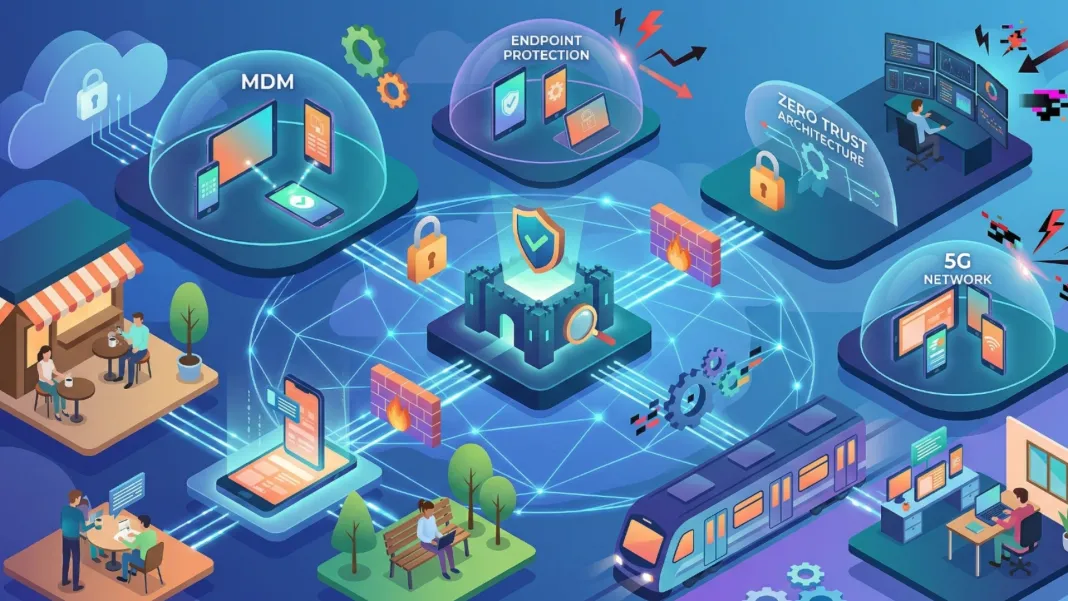
Security models are shifting toward Zero Trust.
Businesses are managing multiple cloud environments.
Edge computing is becoming more common.
And regulations are getting stricter.
All of this is changing how managed IT services are delivered.
Choosing the Right Managed Service Provider
This decision is not just about pricing or certifications.
It’s about fit.
Ask questions like:
- How do they communicate?
- Do they understand your industry?
- Can they scale with your business?
- Do they think beyond quick fixes?
Because in the long run, the relationship matters as much as the technology.
Final Thought: This Isn’t Outsourcing. It’s a Shift in Thinking
It’s easy to call this outsourcing.
But that’s not what’s really happening.
Businesses are not handing off IT. They are restructuring it.
They’re moving from reactive systems to proactive ones.
From constant firefighting to stable operations.
From support functions to strategic infrastructure.
And in today’s world, that shift makes all the difference.
FAQs
1. What are IT managed services?
They are services where a provider manages and maintains your IT systems continuously.
2. Are managed IT services suitable for small businesses?
Yes. In fact, growing businesses benefit the most.
3. Can I keep my internal IT team?
Yes. Many companies use co-managed IT services.
4. Are managed services secure?
Yes, if implemented correctly with strong monitoring and security practices.
5. How much do IT managed services cost in India?
Costs vary based on complexity, but they are generally predictable and scalable.