There was a time when companies could treat geopolitics as background noise.
Important, yes, but distant. Something governments handled while businesses focused on markets, customers, and operations. Strategy was built around demand, competition, and cost. If a company executed well, geopolitical shifts were seen as external variables, not core drivers.
That separation is breaking down.
Today, business strategy geopolitical awareness is no longer optional, especially for companies operating across borders or even those indirectly connected to global systems. Political decisions are shaping supply chains, influencing access to technology, redefining market entry, and in some cases determining whether entire business models remain viable.
This is not a temporary phase.
It reflects a deeper structural shift where geopolitics has moved from the edge of strategy to the center of it.
The Old Model: Markets First, Politics Later
For decades, globalization allowed companies to operate with a relatively simple assumption.
Markets were primary.
Politics followed.
If a market was large enough, companies would enter it. If production was cheaper elsewhere, they would shift operations. The system, while not perfect, was predictable enough to plan around.
This model depended on a level of stability.
Trade agreements reduced friction. Political tensions existed, but they rarely disrupted core business operations at scale. Companies could separate economic decisions from political considerations most of the time.
That separation is now harder to maintain.
The Shift: Politics Is Now Embedded in Markets
The current environment looks different.
Political decisions are directly shaping economic outcomes. Trade restrictions, technology bans, regulatory requirements, and national policies are influencing how companies operate in ways that cannot be ignored.
This is where geopolitics and business strategy become inseparable.
A company expanding into a new region must now consider not only market demand but also political alignment, regulatory stability, and potential future conflicts. Decisions that were once purely commercial now carry political implications.
This changes how strategy is built.
The US – China Dynamic as a Structural Example
One of the clearest examples of this shift is the relationship between the United States and China.
This is not just a political rivalry.
It is an economic and technological competition that affects global markets. Restrictions on technology transfer, limitations on semiconductor access, and evolving trade policies have forced companies to rethink their strategies.
For businesses, this creates a complex environment.
Operating in both markets may involve navigating conflicting regulations. Supply chains that depend on components from one region may face restrictions in another.
This is not theoretical.It directly influences global political risk business decisions.
Supply Chains Are No Longer Neutral
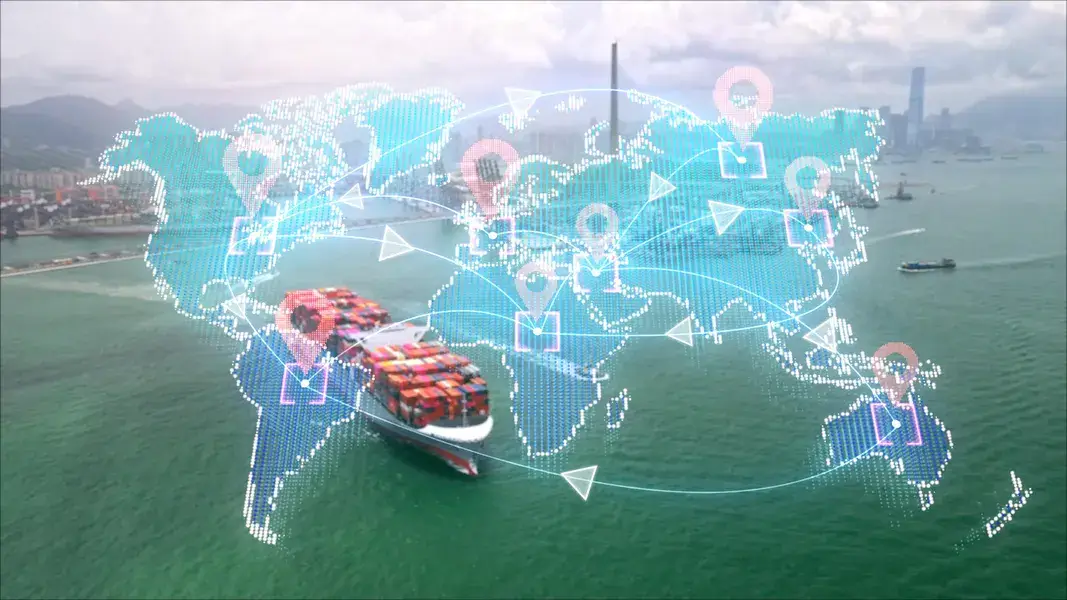
Supply chains used to be designed primarily for efficiency.
Now they are designed with risk in mind.
Companies are evaluating not just cost and speed, but also political exposure. Dependence on a single country or region can become a strategic vulnerability if geopolitical conditions change.
This is why supply chain diversification is becoming more common.
It is not just about resilience.
It is about reducing geopolitical risk.
Data Has Become a Strategic Asset
Another major factor shaping business strategy geopolitical awareness is data.
Data is no longer just an operational resource.
It is a strategic asset with political implications.
Countries are introducing regulations around data storage, access, and transfer. These data sovereignty laws require companies to store and process data within specific jurisdictions.
For global companies, this creates complexity.
Systems must be adapted to comply with different regulations in different regions. Data flows that were once seamless now require careful management.
This affects everything from product design to infrastructure decisions.
Economic Alliances Are Reshaping Markets
Trade relationships are also evolving.
Countries are forming alliances that influence economic activity. These alliances can affect tariffs, market access, and regulatory alignment.
For businesses, understanding economic alliances impact business is critical.
Operating within aligned regions may provide advantages.
Operating across conflicting regions may introduce challenges.
This adds another layer to strategic planning.
The Cost of Ignoring Geopolitics
Companies that ignore geopolitical factors risk making decisions that are not sustainable.
Entering a market without understanding political conditions can lead to unexpected restrictions. Building supply chains without considering geopolitical risk can create vulnerabilities.
This is why impact of geopolitics on corporate strategy is not just about large multinational corporations.
Even smaller companies are affected indirectly.
Global systems are interconnected.
Strategy Is Becoming More Dynamic
Traditional strategy involved long-term planning.
Five-year plans, stable projections, predictable growth.
In the current environment, strategy must be more flexible.
Geopolitical conditions can change quickly.
Companies need to adapt.
This requires a different mindset.
Strategy becomes less about fixed plans and more about continuous adjustment.
Leadership Needs a Broader Perspective
Leaders must now understand more than markets and operations.
They need awareness of political trends, regulatory environments, and global relationships.
This does not mean becoming political experts.
It means recognizing how external forces influence internal decisions.
This is a shift in how leadership operates.
The Balance Between Opportunity and Risk
Geopolitics introduces both challenges and opportunities.
New markets emerge.
Old markets become more complex.
Companies must balance these factors.
This requires careful analysis.
Not every opportunity is worth pursuing.
Not every risk can be avoided.
The Future of Strategy
Looking ahead, business strategy geopolitical awareness will continue to grow in importance.
Global systems are becoming more complex.
Political and economic factors are increasingly intertwined.
Companies that understand this will be better positioned.
Those that do not may face unexpected challenges.
Final Thought
Business strategy used to operate within markets.
Now it operates within systems shaped by politics, economics, and global relationships.
Ignoring geopolitics is no longer an option.
Understanding it is not just useful.
It is necessary.