If you look at Fashion Week purely from a business perspective, it feels inefficient.
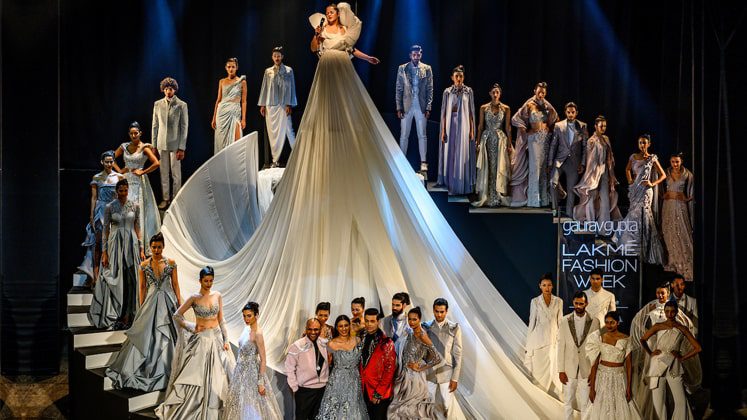
Millions of dollars are spent on a single show that lasts less than twenty minutes. Venues are transformed into theatrical spaces. Models walk down a runway wearing collections that, in many cases, won’t even be available for months.
There is no direct transaction happening in that moment. No immediate revenue. No instant conversion.
And yet, year after year, brands continue to invest heavily in these events across cities like Paris, Milan, New York, and London.
At first glance, it seems irrational.
But Fashion Week is not designed to generate immediate sales. It operates on a different layer of the fashion economy, one where perception, influence, and long-term positioning matter far more than short-term revenue.
To understand why it still exists and why it continues to matter in 2026, you have to stop thinking of it as an event and start seeing it as infrastructure.
Fashion Week Is a Signal, Not a Sales Channel
Fashion Week functions as a signal to the market.
It tells the world that a brand is relevant, active, and culturally engaged. It positions the brand within a hierarchy of influence that extends far beyond the runway itself.
The audience inside the venue is small, often limited to editors, buyers, celebrities, and select clients. But the real audience is much larger and mostly invisible in the moment.
Images, videos, and commentary spread across digital platforms within minutes. What happens in a controlled physical environment is quickly amplified into a global media event.
This is where the economic value begins to emerge.
Brands are not paying for a show. They are paying for attention, distribution, and narrative control.
Media Value Has Replaced Direct ROI
Traditional marketing focuses on measurable returns.
How many units were sold? What was the conversion rate? How much revenue did a campaign generate?
Fashion Week does not fit neatly into those metrics.
Instead, its value is measured through media impact.
In 2025, brands increasingly track what is known as earned media value (EMV). This includes:
- social media reach
- influencer amplification
- press coverage
- digital engagement
A single runway show can generate millions, sometimes hundreds of millions, in media exposure across platforms.
This exposure is not random.
It is highly curated and aligned with brand identity.
The show becomes content. The content becomes distribution. And the distribution reinforces brand positioning.
Prestige Is Built Through Visibility, Not Accessibility
One of the paradoxes of luxury fashion is that visibility does not reduce exclusivity. In fact, when managed correctly, it strengthens it.
Fashion Week allows brands to be seen without becoming accessible.
The audience can observe, admire, and discuss the collection, but access remains limited. The products are not immediately available to the general public. Even when they are released, availability is often controlled.
This creates a gap between visibility and ownership.
That gap is important.
It allows brands to maintain aspiration while still occupying a central position in cultural conversations.
Buyers and the Wholesale Economy
While media attention dominates discussions about Fashion Week, there is also a more traditional business function happening behind the scenes.
Buyers from retail stores and department chains attend shows to evaluate upcoming collections. Their decisions influence what products will appear in stores months later.
This wholesale layer remains significant, especially for brands that rely on multi-brand retail distribution.
However, its importance has shifted.
Direct-to-consumer models and online platforms have reduced dependence on wholesale channels. Many luxury brands now prioritize their own stores and digital platforms.
As a result, Fashion Week has evolved from a primarily transactional event into a hybrid system that combines commerce with storytelling.
Cities Compete Through Fashion Week
Fashion Week is not only about brands. It is also about cities.
Paris, Milan, New York, and London have built reputations as global fashion capitals partly through these events.
Each city offers something different.
Paris represents heritage and high fashion. Milan emphasizes craftsmanship and luxury manufacturing. New York focuses on commercial fashion and market adaptability. London often acts as a space for experimentation and emerging designers.
These identities attract investment, tourism, and global attention.
In this sense, Fashion Week operates as economic infrastructure for cities as well as brands.
Hotels, restaurants, transportation services, and event management industries all benefit from the concentration of global visitors during these periods.
The Role of Influencers and Digital Creators
Over the past decade, the composition of Fashion Week audiences has changed.
Traditional gatekeepers such as magazine editors and critics still play a role, but digital creators now hold significant influence.
Influencers, content creators, and social media personalities bring new forms of distribution.
They translate runway shows into content that reaches millions of followers instantly.
This shift has changed how brands design shows.
Runways are now created with digital visibility in mind. Lighting, set design, and pacing are optimized not just for the live audience but for cameras and mobile screens.
The show is no longer just a physical experience.
It is a content production system.
The Cost Structure of Prestige
Producing a Fashion Week show is expensive.
Costs include:
- venue rental
- set design and production
- model fees
- styling and logistics
- marketing and media coordination
For major luxury brands, these expenses can reach millions of dollars per show.
Yet these costs are not viewed as waste.
They are investments in brand equity.
Luxury brands operate on long time horizons. A single show may not produce immediate revenue, but it contributes to brand perception over years, even decades.
That perception influences pricing power, customer loyalty, and global recognition.
Fashion Week in the Age of AI and Digital Fashion
In 2025 and 2026, new technologies are beginning to influence Fashion Week, but not in the way many predicted.
Virtual shows and digital fashion presentations gained attention during the pandemic period, but physical events have returned strongly.
What has changed is how digital tools are used around the event.
AI-driven trend analysis helps brands understand audience reactions in real time. Social listening tools track how collections are discussed across platforms.
Digital twins of collections may exist for internal planning or future virtual applications, but the core experience remains physical.
This reinforces an important point.
Luxury still relies heavily on tangible experiences.
The physical runway show remains a powerful symbol of authenticity and craftsmanship.
Why Brands Cannot Opt Out
Given the cost and complexity, a logical question emerges.
Why don’t brands simply stop participating?
Some have tried.
A few brands have experimented with alternative release strategies, bypassing traditional Fashion Week schedules.
However, absence carries its own risk.
Fashion Week acts as a coordination mechanism for the industry. It defines when attention is concentrated and where it is directed.
Not participating can mean losing visibility during critical moments.
For luxury brands, silence can be interpreted as irrelevance.
That risk is often greater than the cost of participation.
The Long-Term Function of Fashion Week
At its core, Fashion Week performs three key functions.
It maintains hierarchy within the fashion industry. It reinforces brand identity through controlled storytelling. And it generates global attention that extends far beyond the event itself.
These functions are not easily replaced.
Digital platforms can distribute content, but they do not create the same concentrated moment of attention.
Retail stores can sell products, but they do not build narrative in the same way.
Fashion Week sits at the intersection of culture, media, and commerce.
Final Thought
Fashion Week does not survive because it is efficient.
It survives because it is effective.
It creates a moment where the industry pauses, observes, and redefines itself.
For brands, it offers something that traditional marketing cannot fully replicate.
Control over narrative at a global scale.
And in a market where perception drives value, that control is worth far more than the cost of the show itself.