
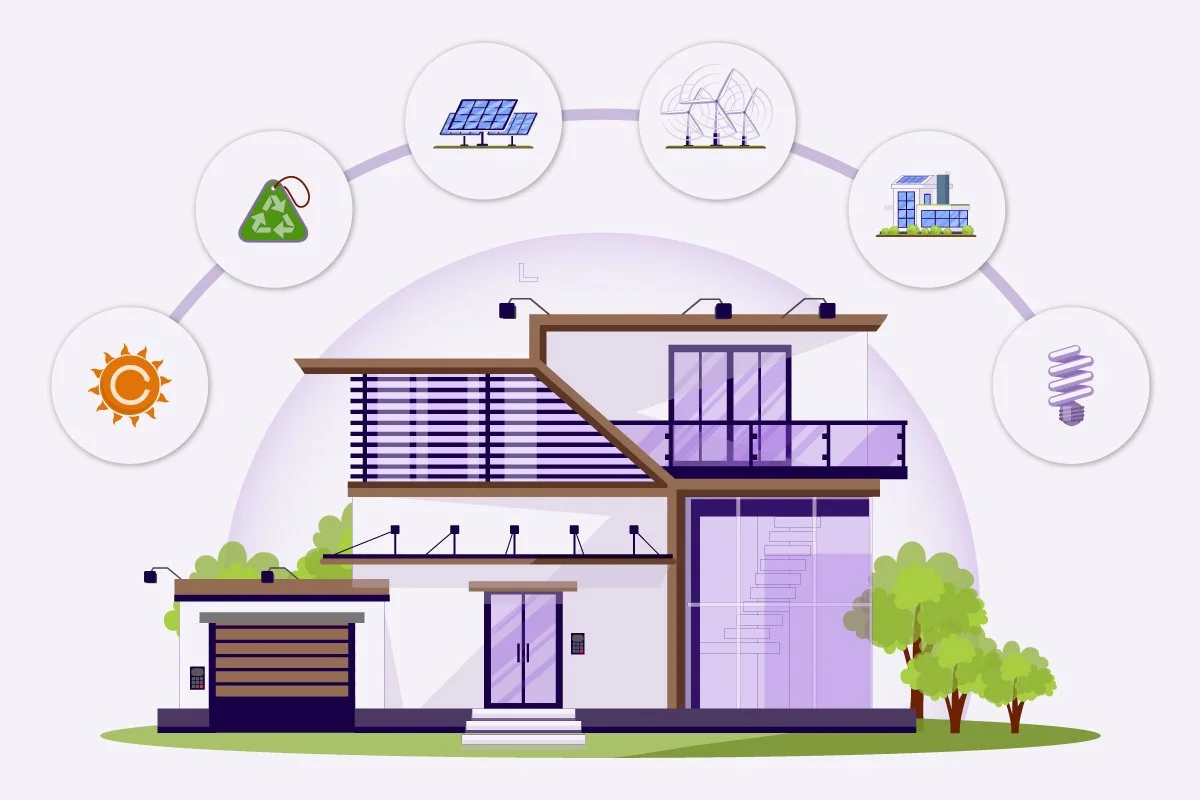
Energy efficiency has moved from an environmental talking point to a practical household strategy.
For years, people talked about reducing energy consumption mainly to protect the environment. That motivation still exists, but today, many homeowners have another reason.
Rising energy costs.
Electricity prices fluctuate in many regions, and households are looking for ways to control monthly expenses. The result is a growing interest in energy-efficient homes.
The interesting part is that many improvements do not require massive renovations.
Small upgrades can significantly reduce energy use over time.
Why Traditional Homes Waste Energy
Many older homes were built before energy efficiency became a design priority.
Walls may lack proper insulation. Windows allow air to leak through small gaps. Heating and cooling systems operate without modern efficiency controls.
These issues allow energy to escape.
During winter, warm air leaks out of the house. During summer, cool air escapes while heat enters through poorly insulated surfaces.
The heating or cooling system must work harder to maintain comfortable temperatures.
That extra work increases electricity consumption.
Over months and years, the cost becomes substantial.
Insulation Is One of the Most Effective Upgrades
Improving insulation is often the most impactful step homeowners can take.
Insulation slows the transfer of heat between indoor and outdoor environments.
When insulation is effective, indoor temperatures remain stable. Heating systems run less frequently in winter. Air conditioners operate less during hot weather.
Attics, walls, and floors are common areas where insulation improvements can make a difference.
Although insulation upgrades require an upfront investment, they often pay for themselves through reduced energy bills.
Smart Thermostats Are Changing Energy Management
Technology has introduced new ways to manage home temperature.
Smart thermostats allow homeowners to control heating and cooling systems with greater precision.
These devices learn household routines and adjust temperatures automatically. For example, the system can reduce heating when residents leave for work and restore comfortable temperatures before they return.
Many smart thermostats also provide energy usage reports.
Homeowners can see how much energy their systems consume and identify opportunities to reduce waste.
This information helps people make better decisions about temperature settings and schedules.
LED Lighting Is One of the Simplest Improvements
Lighting used to consume a significant portion of household electricity.
Traditional incandescent bulbs generated light by heating a metal filament, which wasted much of the energy as heat.
LED technology changed this dramatically.
LED bulbs produce the same brightness while using far less electricity. They also last much longer than traditional bulbs, reducing replacement costs.
Switching to LED lighting is one of the easiest and most affordable ways to reduce household energy consumption.
Energy-Efficient Appliances Make a Difference
Modern appliances are designed with energy efficiency in mind.
Refrigerators, washing machines, dishwashers, and air conditioners now operate with improved technology that reduces electricity and water usage.
Many appliances carry energy efficiency ratings that help consumers compare performance.
Although efficient appliances may cost slightly more initially, they often reduce operating costs significantly over time.
For households that use appliances frequently, the savings can accumulate quickly.
Sealing Air Leaks Prevents Energy Loss
Small gaps around windows and doors allow air to escape continuously.
These leaks may seem insignificant, but they allow warm or cool air to leave the home throughout the day.
Weather stripping and sealants can close these gaps effectively.
Once leaks are sealed, indoor temperatures stabilize and heating or cooling systems run less often.
This improvement is inexpensive yet surprisingly effective.
Solar Energy Is Expanding Rapidly
Another major trend in energy-efficient homes is the adoption of rooftop solar panels.
Solar systems allow homeowners to generate electricity directly from sunlight.
While installation costs remain significant, declining prices and government incentives have made solar energy more accessible in many regions.
Homes with solar panels can reduce their dependence on traditional electricity sources and sometimes even sell excess power back to the grid.
For homeowners planning long-term energy savings, solar energy is becoming an attractive option.
Energy Efficiency Is a Long-Term Investment
Energy-efficient upgrades rarely provide instant, dramatic results.
Instead, they create gradual improvements.
Lower utility bills. More stable indoor temperatures. Reduced strain on heating and cooling systems.
Over years, those small benefits accumulate.
A well-insulated home with efficient appliances and smart energy management can save substantial amounts of money compared with a poorly optimized house.
Homes Are Becoming Energy Systems
The future of home improvement will likely focus even more on energy management.
Smart home platforms are beginning to connect lighting, heating, appliances, and solar systems into a single control network.
Homeowners will be able to monitor energy usage in real time and adjust consumption automatically.
Instead of simply consuming electricity, homes may actively manage when and how energy is used.
That shift transforms houses into intelligent energy systems.
And for homeowners looking to reduce costs and improve sustainability, that transformation may become one of the most valuable upgrades of all.