For more than a century, driving has required one essential element.
A human behind the wheel.
From the earliest gasoline vehicles to modern high-performance cars, transportation systems have depended on human judgment to navigate roads, react to traffic, and avoid accidents.
But that assumption is beginning to change.
Advances in artificial intelligence, sensors, and computing systems are pushing the automotive industry toward a new possibility: vehicles that can drive themselves.
Autonomous cars, sometimes called self-driving vehicles, are no longer just experimental prototypes in research labs.
Technology companies, automakers, and transportation startups are actively developing systems designed to navigate complex road environments with minimal or no human input.
The journey toward fully autonomous transportation is still ongoing.
Yet the progress achieved over the past decade suggests that the role of human drivers may gradually evolve in the years ahead.
What Autonomous Driving Actually Means
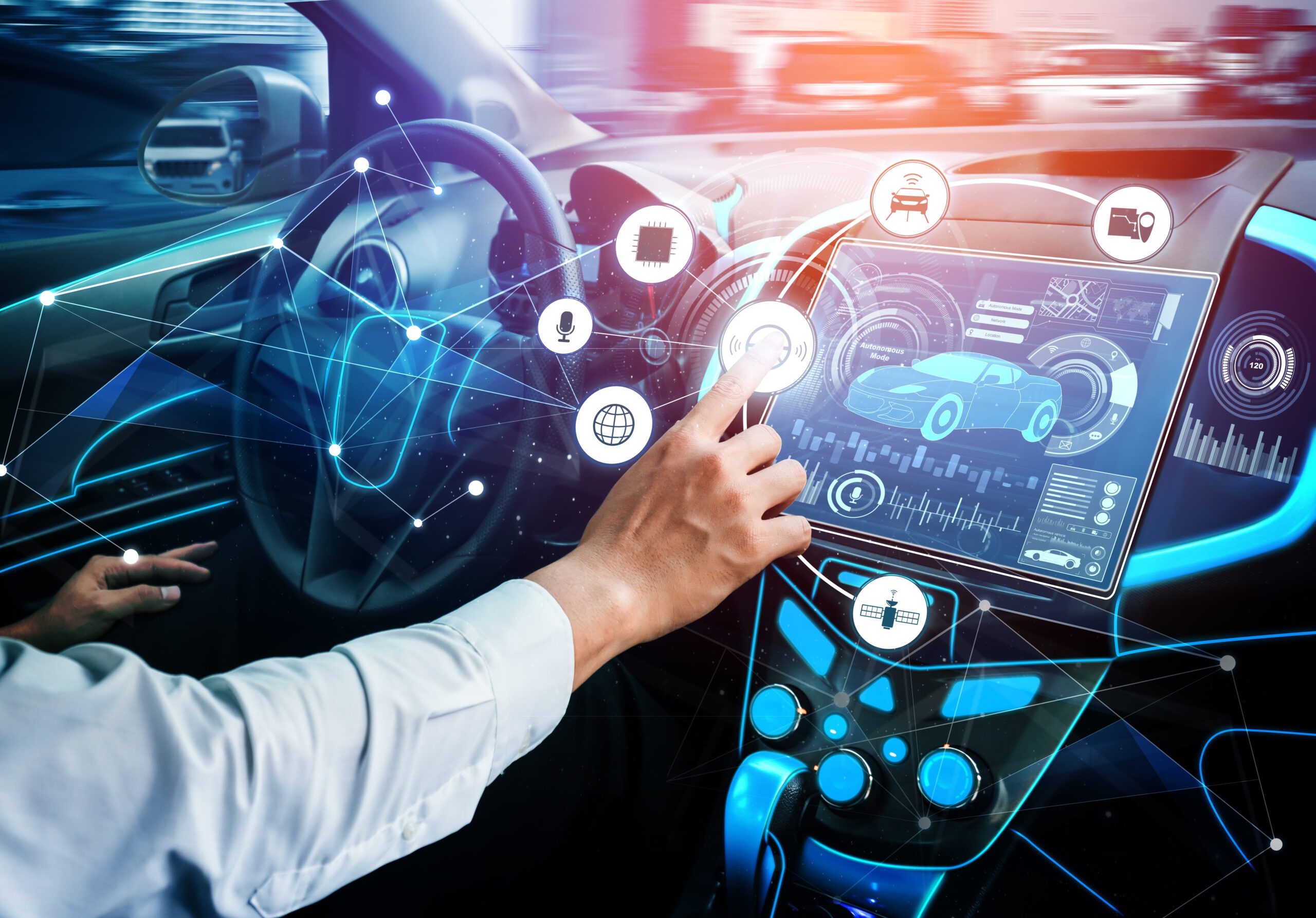
Autonomous vehicles rely on a combination of technologies to understand their surroundings and make driving decisions.
Unlike traditional cars that depend entirely on human perception, self-driving systems analyze their environment using sensors and software.
These systems collect information from several sources:
Cameras observe road signs, traffic lights, and lane markings.
Radar sensors detect objects and measure distances.
Lidar systems create detailed three-dimensional maps of the surrounding environment.
All of this information feeds into onboard computers running artificial intelligence algorithms.
These algorithms analyze the data in real time to determine how the vehicle should move.
Should the car slow down? Change lanes? Stop at an intersection?
The system continuously evaluates these decisions while the vehicle is in motion.
The Levels of Driving Automation
Engineers classify autonomous vehicle technology using a scale that describes different levels of automation.
At the lowest levels, vehicles still rely primarily on human drivers but include assistance features.
Adaptive cruise control can maintain safe distances from other cars. Lane-keeping systems help vehicles stay centered within road lanes.
As automation increases, the vehicle becomes capable of handling more driving tasks independently.
Higher levels of automation involve systems that can manage entire journeys under certain conditions without human input.
The highest level represents full autonomy, where the vehicle operates entirely without a driver.
Most vehicles available today operate within intermediate levels of automation.
They assist drivers but still require human supervision.
Artificial Intelligence Is the Core Technology
Artificial intelligence is the foundation that makes autonomous vehicles possible.
Machine learning algorithms analyze enormous datasets collected from real driving environments.
These datasets include images of road conditions, pedestrian behavior, traffic patterns, and countless other variables.
By studying these examples, AI systems learn how to recognize objects and predict how they might move.
For instance, the system learns to distinguish between pedestrians, cyclists, and other vehicles.
It also learns how these objects typically behave.
A pedestrian standing near a crosswalk may step onto the road. A vehicle signaling a turn may slow down before changing direction.
Predicting these behaviors allows autonomous systems to respond appropriately.
Mapping and Navigation Systems
Accurate navigation is another critical component of autonomous driving.
Self-driving vehicles rely on highly detailed digital maps that include precise information about roads, intersections, and traffic rules.
These maps go far beyond the navigation systems used in traditional vehicles.
They include centimeter-level details about lane structures, traffic signals, and road geometry.
Autonomous vehicles compare their sensor data with these maps to determine their exact position on the road.
When combined with satellite navigation systems, this mapping technology allows vehicles to navigate complex urban environments.
Safety Is the Central Goal
One of the primary motivations behind autonomous vehicle research is improving road safety.
Human error contributes to a large percentage of traffic accidents worldwide.
Fatigue, distraction, impaired driving, and misjudgment can lead to dangerous situations on the road.
Autonomous systems do not become distracted or tired.
They continuously monitor their surroundings and react within milliseconds.
In theory, widespread adoption of autonomous vehicles could significantly reduce accident rates.
However, achieving this goal requires extremely reliable technology.
Even rare system failures could undermine public trust.
For this reason, safety testing remains one of the most demanding aspects of autonomous vehicle development.
Real-World Testing Is Expanding
Autonomous vehicle testing has expanded rapidly in recent years.
Technology companies and automakers have deployed test vehicles in cities across North America, Europe, and Asia.
These vehicles collect data from real traffic environments while engineers monitor system performance.
Some cities now operate limited autonomous taxi services where passengers can ride in vehicles without a human driver.
These pilot programs allow developers to evaluate how autonomous systems perform in real-world conditions.
Testing also helps identify situations where the technology still needs improvement.
Complex traffic environments, unpredictable pedestrian behavior, and severe weather conditions remain challenging scenarios.
Legal and Regulatory Challenges
Electric vehicles are often promoted as environmentally friendly alternatives to traditional cars.
They produce no tailpipe emissions, which can reduce air pollution in urban environments.
However, the environmental impact of electric vehicles depends on several factors.
Battery production requires significant energy and raw materials. Electricity used to charge vehicles may come from renewable sources or fossil fuels depending on the region.
As renewable energy generation expands, the environmental benefits of electric vehicles become more significant.
Recycling programs for battery materials are also developing to reduce resource consumption.
The long-term environmental impact of electric vehicles will depend on how energy systems evolve.Autonomous vehicles introduce new questions for regulators and policymakers.
Traffic laws were originally written with human drivers in mind.
When a vehicle operates autonomously, determining responsibility in the event of an accident becomes more complicated.
Is the vehicle manufacturer responsible? The software developer? The vehicle owner?
Governments around the world are working to develop regulatory frameworks that address these questions.
Testing permits, safety standards, and liability rules are evolving as autonomous technology advances.
Balancing innovation with public safety is an ongoing challenge.
The Impact on Transportation Systems
If autonomous vehicles become widespread, they could transform transportation systems in several ways.
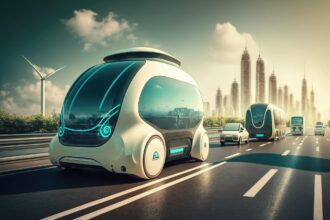
Ride-sharing services may become fully automated. Fleets of autonomous vehicles could provide transportation without human drivers.
Public transit systems may integrate autonomous buses or shuttles to serve areas where traditional transit is less efficient.
Urban planning could also change.
Parking demand might decrease if vehicles drop passengers off and move to other locations rather than waiting idle.
Traffic congestion could potentially decline if autonomous systems coordinate vehicle movement more efficiently.
However, these outcomes depend on how the technology is adopted and regulated.
Economic Effects Across Industries
Autonomous vehicles could influence many industries beyond automotive manufacturing.
Logistics companies are exploring self-driving trucks that could operate long distances with minimal human supervision.
Delivery services may use autonomous vehicles or robots to transport packages.
Insurance companies may adjust risk models as accident patterns change.
Professional driving occupations could also evolve as automation increases.
Some jobs may change significantly, while new roles may emerge related to system monitoring, maintenance, and fleet management.
Challenges Still Remain
Despite rapid progress, autonomous driving technology still faces several challenges.
Complex urban environments remain difficult for machines to interpret perfectly.
Heavy rain, snow, or fog can reduce sensor effectiveness.
Ethical questions about decision-making in emergency situations also remain topics of debate.
For example, how should a vehicle respond if it must choose between two potentially harmful outcomes?
Developing systems capable of handling such rare scenarios safely is extremely difficult.
These challenges explain why full autonomy has taken longer to achieve than early predictions suggested.
The Road Toward Autonomous Mobility
The transition toward autonomous transportation will likely happen gradually.
Driver assistance features will continue improving. Vehicles may become capable of autonomous operation in specific environments such as highways or dedicated urban zones.
Over time these capabilities may expand.
Just as electric vehicles are transforming how cars are powered, autonomous technology may transform how they are operated.
The future of mobility will likely involve a combination of human drivers and increasingly intelligent vehicle systems.
A New Era of Transportation
The development of autonomous vehicles represents one of the most ambitious technological challenges of the modern era.
It requires advances in artificial intelligence, robotics, mapping technology, and regulatory frameworks.
While fully autonomous transportation may still be years away, the progress achieved so far suggests that change is inevitable.
The roads of the future may look familiar.
Cars will still travel between cities and neighborhoods.
But the role of the human driver may gradually evolve as machines become capable of sharing, and eventually assuming the responsibility of driving.
And when that shift finally arrives, transportation may enter a new era defined not just by speed or performance, but by intelligence.