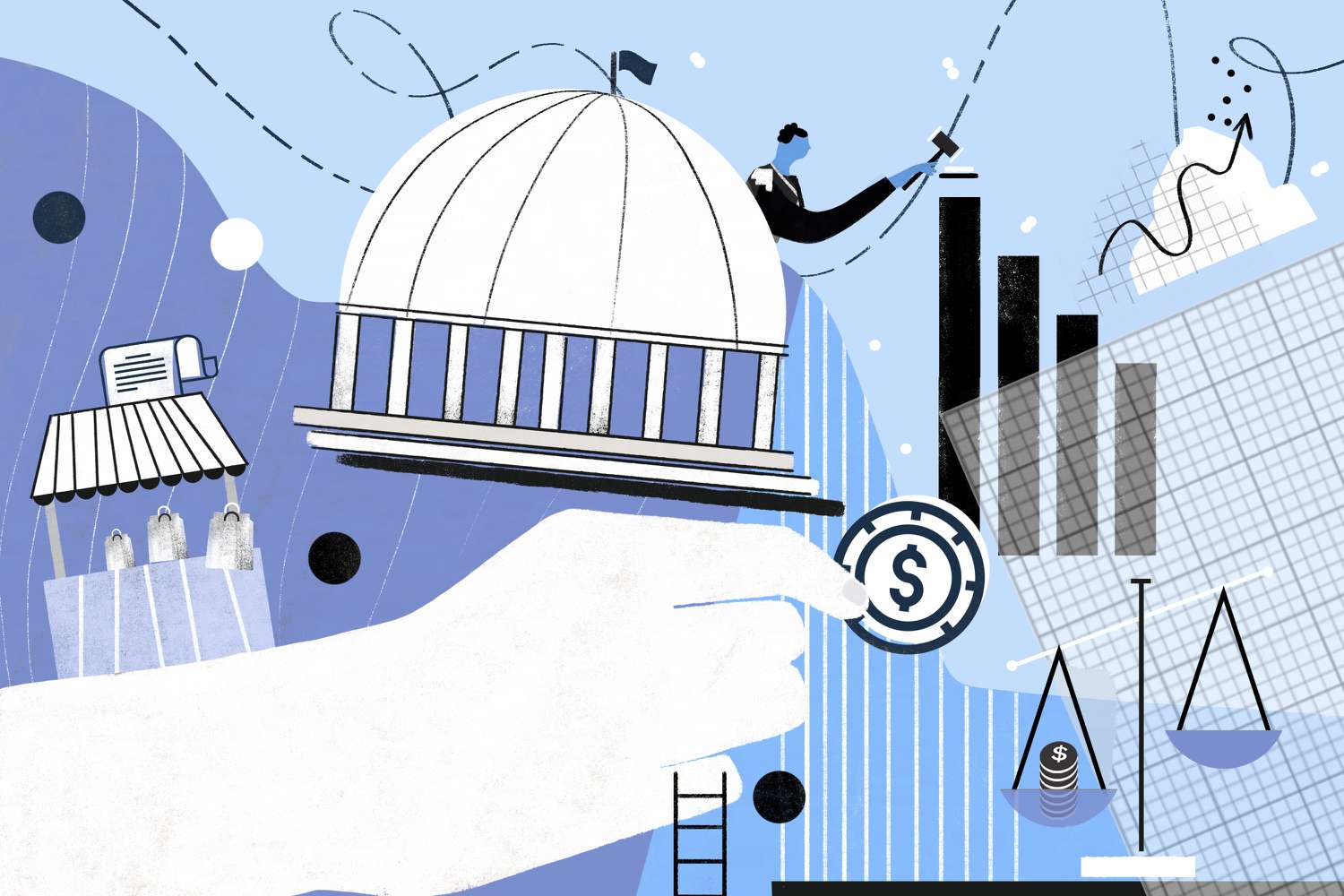
When people think about politics, they often imagine election campaigns, political debates, and speeches from public leaders.
But behind those visible moments lies something far more influential.
Policy decisions.
Every major government policy affects economic systems in some way. Tax regulations influence business investment. Trade policies reshape global supply chains. Environmental rules change how industries operate.
In other words, politics and economics are deeply connected.
Understanding this connection helps explain why investors watch government announcements closely, why businesses monitor regulatory changes, and why entire industries sometimes rise or decline following new legislation.
Political decisions rarely stay within the walls of government institutions.
They ripple through markets, companies, and everyday economic activity.
Government Policy as an Economic Force
Governments influence economies through several tools.
One of the most significant is taxation.
Taxes affect how businesses allocate resources and how consumers spend money. Lower corporate taxes may encourage companies to invest more heavily in expansion or innovation. Higher taxes on certain products may reduce consumer demand.
Another powerful tool is public spending.
Government investments in infrastructure, healthcare, and education can stimulate economic growth by creating jobs and improving productivity.
For example, large infrastructure projects often generate employment opportunities in construction, engineering, and related industries.
These investments also improve transportation networks, which can increase efficiency for businesses moving goods across regions.
Through taxation and spending decisions, governments shape the economic environment in which companies operate.
Trade Policy and Global Markets
Trade policy represents another important area where political decisions influence economic outcomes.
Governments establish tariffs, quotas, and trade agreements that determine how goods move between countries.
Lower trade barriers often encourage international commerce. Businesses gain access to larger markets and may reduce production costs by sourcing materials globally.
However, trade restrictions can produce different outcomes.
Tariffs on imported goods may protect domestic industries but can also increase prices for consumers and businesses that rely on those imports.
Recent years have demonstrated how trade policy can quickly reshape global supply chains.
When governments adjust trade rules, companies often re-evaluate manufacturing locations and supplier relationships.
This process may influence employment levels, production costs, and consumer prices.
Regulation and Industry Transformation
Government regulations play a major role in determining how industries operate.
Regulatory frameworks establish rules designed to protect public interests such as consumer safety, environmental protection, and financial stability.
While regulations often serve important purposes, they also affect how companies structure their operations.
Environmental regulations, for example, require manufacturers to reduce emissions or adopt cleaner production technologies.
These policies can increase costs for businesses in the short term.
However, they can also stimulate innovation by encouraging companies to develop new technologies that meet environmental standards.
Similarly, financial regulations influence how banks manage risk and interact with customers.
After the global financial crisis, many governments introduced stricter regulations designed to improve transparency and stability within financial markets.
These changes reshaped banking practices worldwide.
Political Stability and Investment
Another economic factor closely connected to politics is stability.
Investors generally prefer environments where political institutions operate predictably.
Stable governments tend to produce consistent regulatory frameworks and economic policies.
This predictability allows businesses to plan long-term investments with greater confidence.
Political instability, on the other hand, introduces uncertainty.
Frequent policy changes or unclear regulatory environments may discourage companies from committing large investments.
In extreme cases, political instability can disrupt financial markets or reduce economic growth.
For this reason international investors pay close attention to political developments in countries where they plan to invest.
Technology Policy and Innovation
Modern economies rely heavily on technological innovation.
Governments influence technological development through research funding, education programs, and intellectual property protections.
Public funding for scientific research has historically contributed to major technological breakthroughs.
Universities and research institutions often collaborate with private companies to transform scientific discoveries into commercial products.
Patent laws also play a role by protecting intellectual property rights.
These protections encourage companies to invest in research and development because they can benefit from their innovations.
Technology policy therefore shapes how quickly new ideas move from laboratories into markets.
Energy Policy and Economic Transition
Energy policy provides another example of how political decisions affect entire industries.
Governments determine regulations and incentives related to energy production, distribution, and consumption.
Policies promoting renewable energy technologies encourage investments in solar, wind, and battery storage systems.
These investments create new industries while gradually transforming traditional energy sectors.
At the same time, governments must balance environmental goals with economic considerations.
Energy systems are complex, and sudden changes in policy can influence electricity prices, industrial competitiveness, and employment levels in energy-producing regions.
Carefully designed policies aim to manage these transitions while maintaining economic stability.
The Role of Central Banks
Although not always considered political institutions, central banks play an important role in economic policy.
Central banks manage monetary policy by adjusting interest rates and controlling the supply of money within the economy.
Lower interest rates generally encourage borrowing and investment. Higher rates can slow economic activity to control inflation.
These decisions influence mortgage rates, business loans, and consumer spending.
Central banks operate independently in many countries to reduce political pressure on monetary decisions.
However, their policies still interact with broader government economic strategies.
Together, fiscal policy and monetary policy shape national economic performance.
Public Policy and Social Outcomes
Economic policy also affects broader social outcomes.
Education policy influences workforce skills and long-term productivity.
Healthcare policies affect labor participation and quality of life.
Housing policies influence affordability and urban development.
When governments invest in public services, they can improve economic opportunities for citizens.
These investments often produce benefits that extend beyond immediate economic indicators.
For example, improved education systems can lead to stronger innovation ecosystems as skilled workers contribute to new industries.
Public policy therefore shapes not only economic growth but also the distribution of economic opportunities within society.
Global Cooperation and Economic Policy
In an interconnected world, economic policy rarely operates in isolation.
International organizations and multilateral agreements influence how countries coordinate economic strategies.
Trade agreements establish common rules for international commerce.
Climate agreements encourage countries to coordinate environmental policies.
Financial institutions support economic stability by assisting countries during financial crises.
These cooperative efforts reflect the reality that global challenges often require coordinated responses.
Economic policy increasingly involves collaboration between governments as well as domestic decision-making.
Policy Decisions Create Long-Term Effects
One of the most important characteristics of political decisions is their long-term impact.
Economic policies introduced today may influence markets for decades.
Infrastructure investments can shape regional development for generations.
Regulatory frameworks influence how industries evolve over time.
Because of these long-term effects, policymakers often face difficult trade-offs.
Short-term economic gains may conflict with long-term sustainability goals.
Balancing these considerations requires careful analysis and informed debate.
Understanding the Relationship Between Politics and Economics
The relationship between politics and economics is complex but unavoidable.
Government decisions influence markets, industries, and everyday economic activity.
Businesses monitor policy developments closely because regulations, taxes, and trade agreements affect their strategies.
Investors evaluate political environments before committing capital.
Citizens experience the results of these policies through employment opportunities, public services, and economic conditions.
Understanding how political decisions influence economic systems helps explain many of the changes happening in global markets.
The Future of Policy and Economic Development
Looking ahead, political decisions will continue shaping the direction of economic development.
Technological change, environmental challenges, and shifting global trade patterns will require governments to adapt policies carefully.
Countries that balance economic growth with innovation, sustainability, and social stability may achieve stronger long-term prosperity.
At the same time, businesses and citizens will remain active participants in these discussions.
Economic policy ultimately reflects choices made within societies.
And those choices will continue shaping industries, markets, and opportunities for years to come.