
Every morning, millions of people wake up and reach for their phones.
Within minutes, they scroll through news updates, social media posts, emails, and messages.
This behaviour has become so common that many people barely notice it anymore.
Yet this routine reveals something important about modern life.
Attention has become one of the most valuable resources in the digital world.
Attention Drives the Modern Internet
Most major online platforms operate on a similar business model.
They provide free services, social networks, search engines, and entertainment content, and earn revenue through advertising.
For this model to work, platforms need users to spend as much time as possible on their services.
The longer people stay engaged, the more advertisements they see.
This economic incentive has produced an environment where companies compete aggressively for attention.
Notifications, algorithmic recommendations, and endless scrolling feeds all serve the same purpose.
Keep users engaged.
The Cost of Constant Distraction
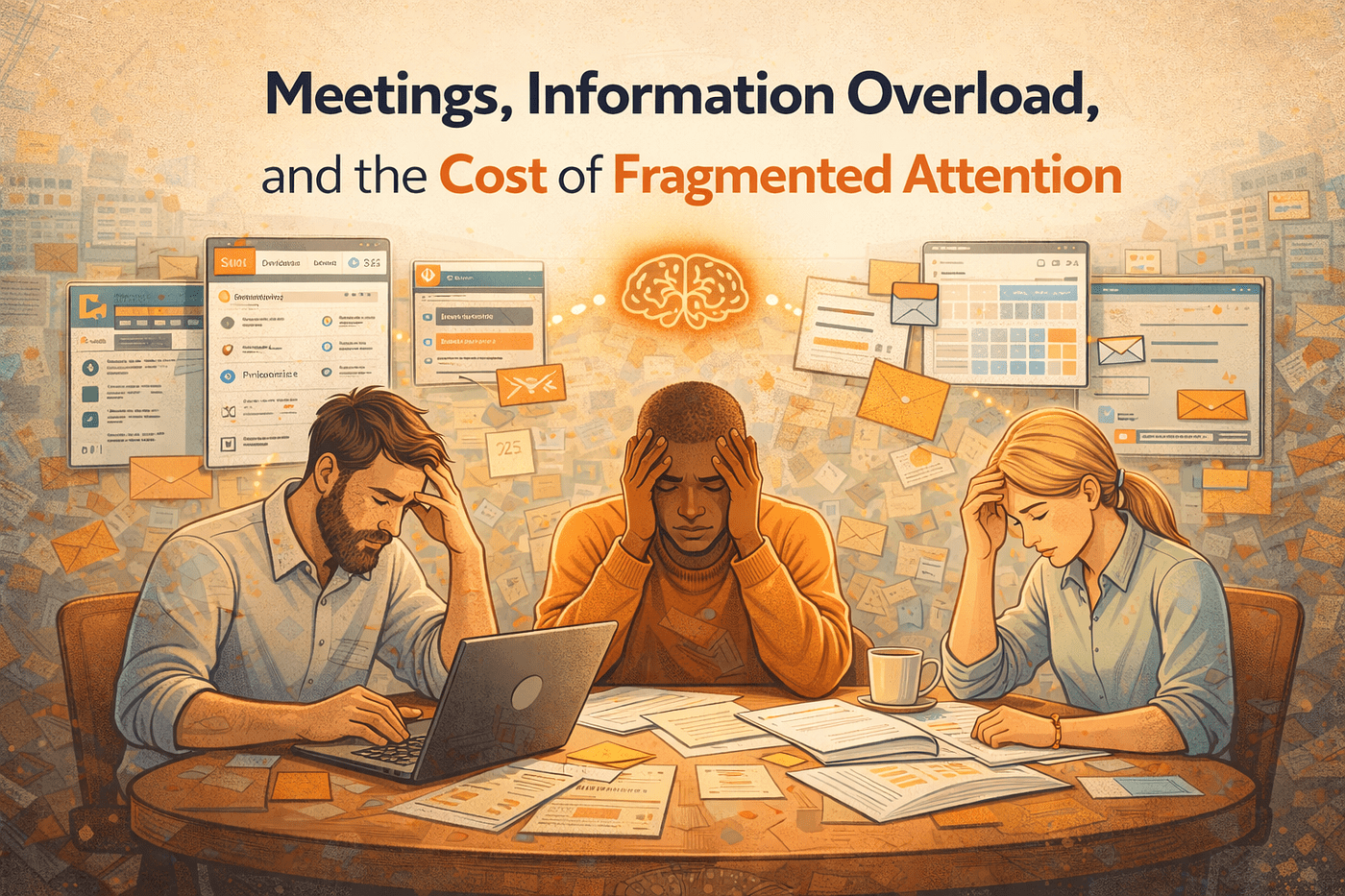
While this system benefits technology companies, it often creates challenges for individuals.
Constant notifications interrupt concentration. Social media feeds encourage comparison and emotional reactions. Information overload makes it harder to focus on meaningful tasks.
Over time these distractions reduce productivity and increase stress.
Many people feel busy but struggle to complete important work.
The problem is not lack of effort.
It is fragmented attention.
Deep Work Is Becoming Rare
In a world full of interruptions, sustained focus has become increasingly rare.
Deep work, the ability to concentrate on a difficult task without distraction, requires mental space and uninterrupted time.
Yet modern digital environments constantly compete for that space.
Emails arrive every few minutes. Messaging apps expect immediate responses. Social media provides endless entertainment.
Maintaining focus requires deliberate effort.
Strategies for Protecting Attention
Many professionals are developing strategies to protect their focus.
Some schedule specific periods for checking email rather than responding continuously. Others silence notifications during work sessions.
Time-blocking methods allocate specific hours for deep work.
Digital boundaries are also becoming more common.
People limit social media usage, disable unnecessary notifications, or keep phones out of reach during focused tasks.
These practices help restore control over attention.
The Value of Focus in the Future
As technology continues advancing, attention may become even more valuable.
Automation will handle many routine tasks. Creative thinking and complex problem solving will remain uniquely human strengths.
Both require concentration.
Individuals who learn to manage their attention effectively may gain a significant advantage in the modern economy.
Focus, once taken for granted, is becoming a competitive skill.
A Cultural Shift
Society is beginning to recognize the importance of attention management.
Books, podcasts, and productivity communities now discuss strategies for maintaining focus.
Employers are also paying attention.
Some companies encourage meeting-free work blocks or flexible schedules designed to support deep concentration.
These changes reflect a broader cultural shift.
Attention is no longer something people give away casually.
It is something they learn to protect.